Most men trying to fix low testosterone focus on what to take — zinc supplements, protein shakes, testosterone boosters. But here is the uncomfortable truth most health articles skip over: the real reason your testosterone is low is probably not what you are missing. It is what you are not avoiding. Three hormones in your body are actively destroying your testosterone right now. One of them — estrogen — is doing the most damage. And it is being silently fed by things in your daily diet and environment that you would never suspect.
MEDICAL DISCLAIMER: This article is for educational purposes only. Always consult your doctor before making dietary or lifestyle changes.
7 Symptoms of Low Testosterone Most Men Ignore
Low testosterone does not announce itself loudly. It creeps in gradually — and by the time most men notice something is wrong, their levels have been declining for years. Here are the seven most common warning signs:
- Reduced sex drive — testosterone is the primary driver of libido in men. Loss of desire is one of the earliest signs
- Chronic fatigue and low energy — testosterone powers cellular energy. When it drops, everything feels harder and heavier
- Loss of muscle despite exercising — without adequate testosterone, the body cannot build or maintain muscle tissue effectively
- Belly fat accumulation — abdominal fat contains aromatase, the enzyme that converts testosterone into estrogen, worsening the cycle
- Low motivation and mood changes — testosterone directly influences dopamine. Low T leads to apathy, low drive, and depression-like symptoms
- Softening or thinning of the voice — a real sign of rising estrogen dominance as the voice loses depth and resonance over time
- Inability to fast or skip meals — high insulin, another testosterone killer, destabilizes blood sugar and forces frequent eating
Testosterone declines naturally in men by about 1% per year after age 30. But the modern epidemic of low testosterone in men in their 20s and 30s is not natural — it is driven by diet, environment, and the three hormone disruptors described below.
The 3 Hormones Silently Destroying Your Testosterone
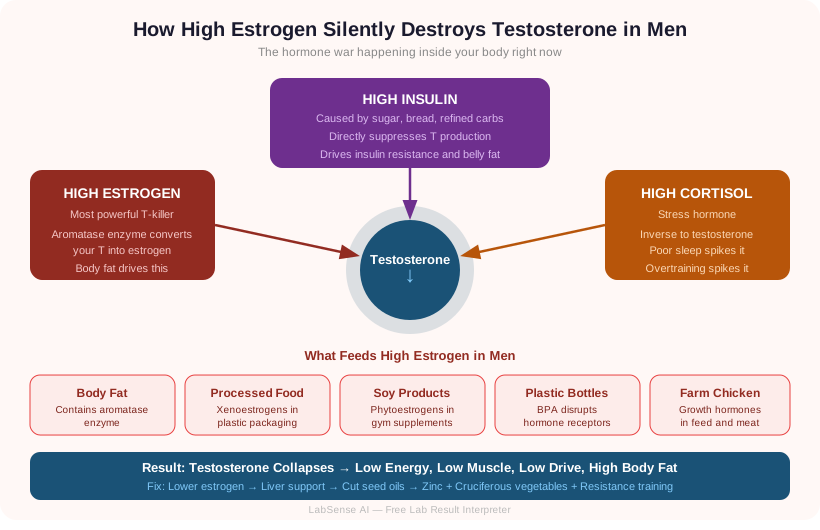
Before focusing on what to take, you need to understand what is working against you. Three hormones — when chronically elevated — cause testosterone to collapse. Fixing your testosterone starts with controlling these three.
Hormone #1: Insulin — The Blood Sugar Testosterone Killer
Insulin is released every time you eat refined carbohydrates and sugar. Chronically high insulin — caused by a diet heavy in bread, pastries, rice, and sweet drinks — directly suppresses testosterone production. Men with insulin resistance consistently show the lowest testosterone levels. The fix is reducing carbohydrate intake to keep insulin low throughout the day.
Hormone #2: Cortisol — The Stress Hormone That Kills Testosterone
Cortisol is your stress hormone. When cortisol rises — through chronic stress, poor sleep, overtraining, or excessive caffeine — testosterone falls. The body prioritizes survival over reproduction. Cortisol and testosterone have a direct inverse relationship: when one goes up, the other comes down.
Hormone #3: Estrogen — The Biggest Testosterone Threat in Men
While all three hormones matter, estrogen is the most destructive and least talked about testosterone killer in men. When estrogen rises significantly — increasingly common with age — testosterone drops fast and dramatically. Men notice real physical changes: voice softening, loss of muscle definition, increased body fat, and mood deterioration. This is estrogen dominance in men and it is far more common than most doctors acknowledge.
The Aromatase Enzyme: How Your Own Body Converts Testosterone Into Estrogen
Inside your body's fat tissue lives an enzyme called aromatase. Its job is to convert testosterone directly into estrogen. The more body fat you carry — especially around the belly — the more aromatase activity you have, and the more of your own testosterone gets converted into estrogen.
The vicious cycle: More body fat → more aromatase → more testosterone converted to estrogen → lower testosterone → easier fat gain → even more aromatase. Breaking this cycle is the foundation of any successful testosterone recovery.
Hidden Estrogen Sources Destroying Your Testosterone Every Day
Beyond body fat, several external sources flood your body with estrogen-like chemicals daily. These are the most impactful ones to eliminate:
- Processed and packaged foods — plastic-packaged foods contain xenoestrogens, synthetic chemicals that mimic estrogen activity and raise your total estrogen burden silently
- Commercially farmed chicken — factory farmed chickens are given growth hormones and antibiotics. Trace hormones and metabolites are absorbed, indirectly raising estrogen
- Soy protein isolates in gym supplements — contain phytoestrogens that mimic estrogen. Approximately 95% of commercial soy is GMO. Switch to whey, casein, or egg-based protein
- Plastic food containers and water bottles — BPA and similar chemicals leach into food and water especially when heated. Switch to glass or stainless steel and never microwave food in plastic
Proven Techniques to Increase Testosterone by Lowering Estrogen Naturally
Now that you understand what is working against you, here are the proven techniques to increase testosterone by addressing estrogen, insulin, and cortisol simultaneously:
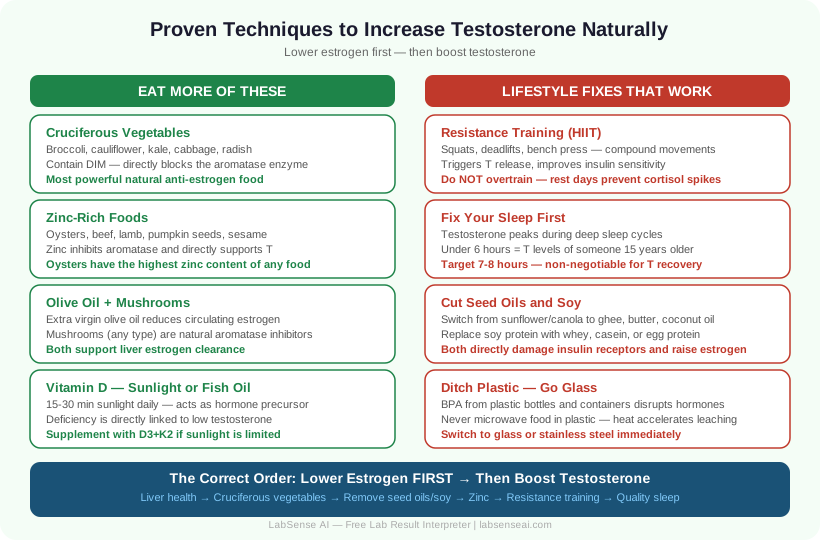
- Zinc supplementation — zinc directly inhibits the aromatase enzyme, blocking testosterone-to-estrogen conversion. Best sources: oysters, beef, lamb, pumpkin seeds, sesame seeds
- Vitamin D from sunlight or fish oil — acts as a steroid hormone precursor. Men deficient in Vitamin D consistently show lower testosterone levels
- Resistance training — compound movements such as squats, deadlifts, and bench press trigger a significant testosterone response and improve insulin sensitivity long-term
- Cruciferous vegetables daily — broccoli, cauliflower, kale, and cabbage contain DIM, a compound that directly inhibits aromatase and helps the liver clear excess estrogen
- Extra virgin olive oil — has been shown to reduce estrogen levels and supports the healthy fats needed for testosterone synthesis
- Mushrooms — contain natural aromatase inhibitors and are one of the simplest anti-estrogen foods you can add daily
- Reduce body fat — every pound of excess fat lost reduces aromatase activity, meaning more of your testosterone stays as testosterone
- 7 to 8 hours of quality sleep — testosterone is primarily produced during deep sleep. Men sleeping under 6 hours show T levels equivalent to someone 15 years older
Why Your Liver Is the Key to Clearing Excess Estrogen
The entire estrogen problem ultimately traces back to the liver. Your liver metabolizes and clears excess estrogen from the body. When the liver is sluggish from processed food, alcohol, or seed oils, estrogen accumulates in the bloodstream instead of being eliminated. Supporting liver health is non-negotiable for testosterone recovery.
- Cruciferous vegetables — broccoli, cauliflower, Brussels sprouts, kale, and cabbage are the most powerful liver-supporting foods
- Spinach, radish and turnip greens — powerful anti-estrogenic effects that support estrogen clearance
- Mushrooms — natural aromatase inhibitors that also support liver detoxification
- Extra virgin olive oil — supports liver function and reduces circulating estrogen
- Garlic and onions — support liver detoxification pathways
- Adequate water — essential for all liver detoxification processes
What to Avoid — The Complete Testosterone Destroyers Checklist
Knowing what to eliminate is just as important as knowing what to add. These are the biggest testosterone killers to remove from your life:
- Soy protein isolates — phytoestrogens mimic estrogen and 95% of soy is GMO and highly estrogenic
- Seed oils (sunflower, canola, soybean) — damage insulin receptors, raise inflammation, and disrupt hormone balance
- Ultra-processed and packaged food — loaded with xenoestrogens from plastic packaging and artificial additives
- Factory farmed chicken and dairy — contains growth hormone and antibiotic residues that indirectly raise estrogen
- Plastic water bottles and food containers — BPA and similar chemicals are potent endocrine disruptors
- Alcohol especially beer — directly suppresses testosterone and contains phytoestrogens from hops
- Chronic overtraining — spikes cortisol which inversely suppresses testosterone. Rest days are essential
- Poor sleep under 6 hours — testosterone peaks during deep sleep. Chronic deprivation causes rapid decline
Have blood work showing testosterone, estradiol, LH, FSH, or SHBG? Use our free AI Lab Result Interpreter to understand exactly what your hormone numbers mean — no sign-up required, plain-language results in seconds.
Frequently Asked Questions
What is the fastest proven technique to increase testosterone naturally?▼
Reducing body fat is the single fastest lever. Every pound of fat lost reduces aromatase activity, meaning less testosterone gets converted to estrogen. Combine fat loss with resistance training and zinc supplementation for the fastest measurable results. Most men see meaningful improvements within 4 to 8 weeks.
Can estrogen really be too high in men?▼
Absolutely. Estrogen dominance in men is increasingly common and clinically recognized. Men need some estrogen for bone health — but when levels rise excessively, testosterone drops sharply. Key signs include soft voice, increased body fat around the chest and belly, low libido, and mood changes.
Does soy really lower testosterone?▼
Traditional fermented soy in small amounts has minimal effect. However, soy protein isolates — used in most gym supplements — are concentrated in phytoestrogens made primarily from GMO soy. Regular consumption has been linked to lower testosterone and higher estrogen in multiple studies. Switch to whey or egg-based protein.
How does the liver affect testosterone?▼
The liver metabolizes and clears excess estrogen from circulation. When liver function is compromised by alcohol, processed food, or fatty liver disease, estrogen accumulates instead of being eliminated. Supporting liver health through cruciferous vegetables and reducing alcohol directly improves estrogen clearance and raises testosterone.
Is BPA in plastics really a concern for testosterone?▼
Yes. BPA is an endocrine disruptor that binds to estrogen receptors. Multiple studies show men with higher BPA exposure have measurably lower testosterone. The effect is amplified when containers are heated — such as microwaving food in plastic. Switching to glass or stainless steel is a simple immediate fix.
How much zinc should I take to help testosterone?▼
The recommended daily amount for adult men is 11mg. For those with confirmed deficiency, 25 to 45mg supplemental zinc has been shown to raise testosterone. However, high-dose zinc long-term should be discussed with a doctor as it competes with copper absorption. Food sources — oysters, beef, and pumpkin seeds — are the safest approach.
References & Sources
Medical Advisory
Expert oversight & content review

Dr. Naeem Mahmood Ashraf
PhD Biochemistry & Biotechnology
University of Punjab, Lahore
Dr. Naeem Mahmood Ashraf is a distinguished biochemist and biotechnologist at the University of Punjab, Lahore, Pakistan. With a PhD in Biochemistry & Biotechnology and over 45 peer-reviewed publications (h-index: 10), Dr. Ashraf brings deep expertise in clinical biochemistry, genomics, and computational biology to LabSense AI. His research bridges laboratory science and patient care, ensuring all interpretations follow WHO, IFCC, and AACC international standards.
Credentials
Areas of Expertise