You probably think the number one cause of heart disease is high cholesterol or blocked arteries. But what if the real culprit is something your doctor never mentioned? In almost every open heart surgery case, one specific type of fat is found to be responsible. It is not the fat under your skin — it is the fat wrapped directly around your heart. In this article, we explain what this fat is, where it comes from, how to know if you have it, and most importantly, how to get rid of it fast.
MEDICAL DISCLAIMER: This article is for educational purposes only and is NOT a substitute for professional medical advice, diagnosis, or treatment. Always consult your doctor before making changes to your diet or lifestyle.
The Real Cause of Heart Disease: Epicardial Fat
Deep inside the chest, wrapped around the heart muscle itself, sits a layer of fat called epicardial fat. Unlike the fat on your belly or thighs, this fat is in direct contact with your heart muscle and coronary blood vessels. That makes it uniquely dangerous. The inflammation produced by epicardial fat hits the heart first before spreading anywhere else in the body. This is why researchers looking at open heart surgery cases consistently find it at the scene of the crime — present in nearly every single patient.
Key Fact: Epicardial fat is found in nearly every open heart surgery case. It is more dangerous than general body fat because it directly inflames the heart muscle and the arteries that feed it.
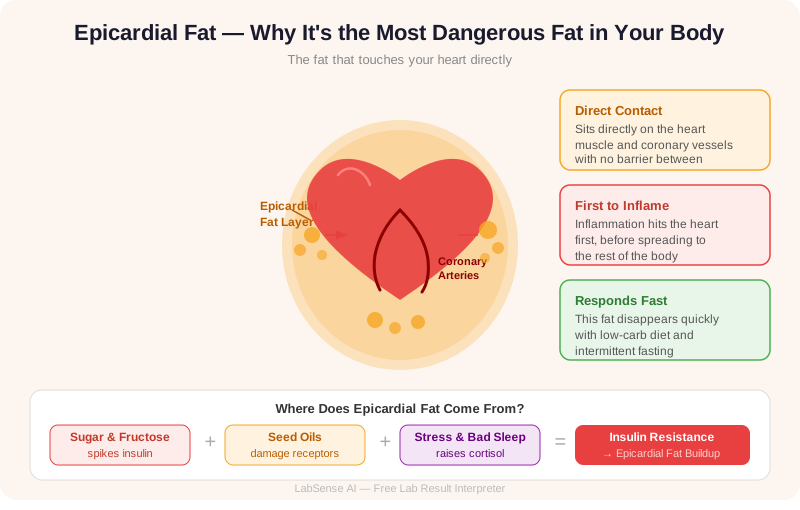
Where Does Epicardial Fat Come From? The Insulin Connection
So where does this dangerous fat come from? The answer is insulin. When insulin levels are chronically high in your body, this hormone actively drives fat production. You gain weight, fat builds up around your organs, and specifically, fat accumulates around your heart. The reverse is also true — when insulin is low, the body burns fat for fuel, weight drops, and that dangerous fat around the heart starts to disappear, often surprisingly quickly.
What Is Insulin Resistance?
Think of insulin resistance this way. Every cell in your body has small docking ports called receptors where insulin connects to deliver energy. In a healthy person, insulin docks smoothly and cells absorb sugar from the blood efficiently. But in insulin resistance, those docking ports stop responding properly. Insulin cannot do its job. Blood sugar stays elevated. The pancreas pumps out more and more insulin trying to compensate. And all that excess insulin drives fat storage — particularly around the heart and liver.
- Around the heart — epicardial fat (most dangerous — directly inflames heart muscle)
- On the liver — fatty liver disease (affects metabolism and cholesterol production)
- Around internal organs — visceral fat (linked to diabetes, cancer, and cardiovascular disease)
7 Warning Signs You May Have Insulin Resistance
You do not need a lab test to suspect insulin resistance. These seven signs are reliable indicators that something is wrong with your insulin system:
- Waist size over 40 inches in men or 35 inches in women — the most reliable physical marker of visceral fat accumulation
- Skin tags on the body, or dark velvety patches in the armpits, neck, or groin (acanthosis nigricans) — a classic visible sign of high circulating insulin
- High triglycerides or low HDL cholesterol on your blood panel — both are directly driven by insulin resistance
- Difficulty losing weight despite dieting and exercise — when insulin is chronically high, your body is locked in fat-storage mode
- Inability to go long without eating — shakiness or intense hunger when skipping a meal signals impaired blood sugar regulation
- Strong cravings for sugar, bread, or junk food — especially when tired or stressed — your body demanding quick glucose because cells are not using it efficiently
- Poor sleep or sleep apnea — chronic sleep deprivation raises cortisol, which raises blood sugar, which drives more insulin, creating a damaging cycle
If you have recent blood work showing triglycerides, HDL cholesterol, fasting glucose, or HbA1c, use our free AI Lab Result Interpreter to understand what your numbers mean for your heart health — no sign-up required.
Cause 1: Refined Carbohydrates, Starches, and Sugar
Insulin resistance does not develop overnight — it builds slowly over years. Potatoes, white bread, naan, biscuits, cakes, pastries, and sweet drinks all flood the bloodstream with glucose, spiking insulin repeatedly throughout the day. The worst offender of all is fructose — the sugar found in sweet drinks, fruit juices, and processed foods. Fructose is processed entirely by the liver and is the fastest route to fatty liver and insulin resistance. It does not trigger satiety hormones, so you keep eating, keep spiking insulin, and the damage accumulates silently.
Cause 2: Seed Oils — The Hidden Driver Nobody Warned You About
Sunflower oil, canola oil, soybean oil, and corn oil dominate modern cooking. They are extremely high in omega-6 fatty acids, which are structurally fragile. When exposed to heat, light, and oxygen during cooking, these fats oxidize and produce toxic byproducts. These oxidized byproducts get incorporated into your cell membranes and can remain there for up to two years — while embedded in your cells, they directly damage the insulin receptors, the very docking ports that allow insulin to work. This is one of the most underappreciated mechanisms behind the modern epidemic of insulin resistance.
Oxidized seed oil byproducts can remain in cell membranes for up to two years, continuously damaging insulin receptors. Switching cooking oils is one of the single most impactful changes you can make for long-term heart health.
Cause 3: Chronic Stress and Poor Sleep
Both chronic stress and inadequate sleep raise cortisol — the stress hormone. Cortisol directly raises blood sugar levels, which forces the pancreas to release more insulin. Over time this contributes to insulin resistance. This is also why sleep-deprived and chronically stressed people crave sugar and junk food — the body is desperately trying to raise blood sugar that cortisol has already destabilized. Aim for 7–8 hours of quality sleep every night and actively manage stress through exercise, breathing, or mindfulness.
The Bottom Line: Epicardial fat — the root cause of heart disease — comes from three converging sources: refined sugar and starches + oxidized seed oils + chronic stress and poor sleep. Combine all three and you have the perfect formula for insulin resistance, epicardial fat accumulation, and eventually heart disease.
The Good News: This Fat Disappears Fast With the Right Approach
Epicardial fat responds to lifestyle changes faster than almost any other type of fat in the body. Research shows measurable reductions in as little as four to eight weeks of consistent dietary changes. You do not need surgery or expensive medications — you need the right strategy applied consistently. Here is the complete step-by-step approach, backed by evidence.
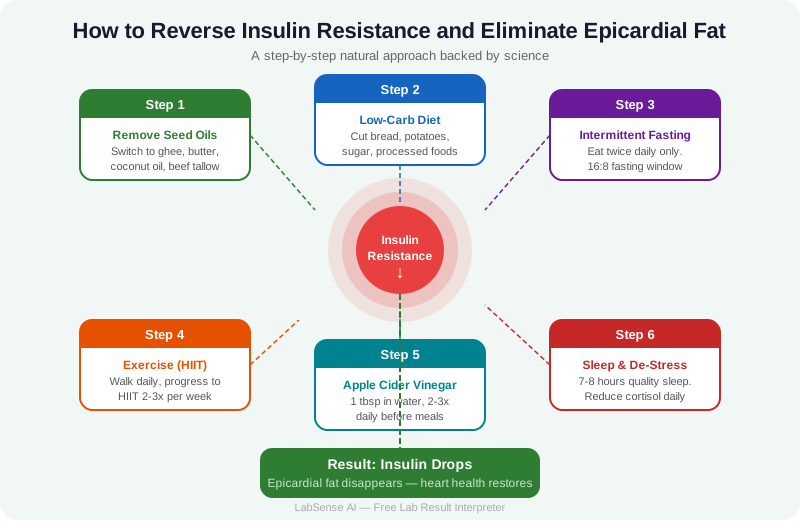
Step 1: Remove Seed Oils Immediately
This is the single most impactful change you can make. Stop using sunflower, canola, soybean, and corn oil today. Replace them with stable, traditional fats that do not oxidize and damage your cells:
- Grass-fed butter or ghee — ideal for cooking at any temperature, rich in fat-soluble vitamins
- Coconut oil — stable at high heat, excellent for stir-frying and baking
- Beef tallow — highly stable, traditionally used for centuries, ideal for frying
- Extra virgin olive oil — best used cold or at low heat, rich in anti-inflammatory polyphenols
Step 2: Adopt a Low-Carb or Ketogenic Diet
Cut out the foods that spike insulin most aggressively — bread, potatoes, rice, sugary drinks, pastries, and processed snacks. Replace them with protein-rich and fat-rich foods that keep insulin low and stable: eggs, meat, fish, leafy vegetables, nuts, and cheese. This dietary shift is the foundation of reducing epicardial fat accumulation at its source.
Step 3: Implement Intermittent Fasting
Skip breakfast. Eat your first meal around noon and your second meal in the evening — a 16-hour fasting window followed by an 8-hour eating window. This is called 16:8 intermittent fasting and it is one of the most powerful tools for lowering insulin levels naturally. When insulin stays low for extended periods, your body has no choice but to burn stored fat, including the dangerous fat wrapped around your heart.
Step 4: Exercise Smart — Walking Plus HIIT
Start with daily walking — it is underrated and genuinely effective at improving insulin sensitivity. Then progress to High Intensity Interval Training (HIIT) two to three times per week — this specific type of exercise is the most powerful known way to increase insulin receptor sensitivity. One important warning: do not overtrain. Rest one or two days per week. Overtraining spikes cortisol, which raises blood sugar, which drives fat storage and undoes your progress.
Two Additional Natural Remedies That Actually Work
In addition to the core four steps above, two natural compounds have strong evidence for improving insulin sensitivity:
- Apple Cider Vinegar — Mix one tablespoon in a glass of water and drink two to three times daily before meals. ACV improves insulin sensitivity, blunts post-meal blood sugar spikes, and supports digestion. Use raw, unfiltered ACV with the mother.
- Berberine — A natural plant compound that works similarly to the diabetes drug Metformin. It activates AMPK, an enzyme that improves insulin sensitivity and accelerates fat loss. Available as a supplement. Consult your doctor before use, especially if you are on other medications.
Your 7-Step Action Plan — Start Today
Combining all the strategies above into one clear daily plan:
- Remove seed oils immediately — switch to ghee, butter, coconut oil, or beef tallow
- Cut out refined carbohydrates and sugar — bread, potatoes, rice, pastries, and sweet drinks are the first to go
- Eat only twice a day — skip breakfast and implement intermittent fasting (12 PM to 8 PM eating window)
- Exercise daily — start with walking, then add HIIT two to three times per week
- Drink apple cider vinegar in water two to three times daily before meals
- Prioritize sleep — aim for seven to eight hours of quality sleep every night
- Manage stress — chronic cortisol elevation directly fuels insulin resistance and epicardial fat accumulation
Have blood work showing triglycerides, HDL, fasting glucose, or HbA1c? Use our free AI Lab Result Interpreter to understand exactly what your numbers mean for your cardiovascular risk — no sign-up required, results in seconds.
Frequently Asked Questions
Can epicardial fat actually be reduced without medication?▼
Yes. Research consistently shows that low-carbohydrate diets and intermittent fasting reduce epicardial fat significantly — often faster than other types of body fat. In some studies, measurable reductions were seen in as little as four to eight weeks of dietary changes.
Is ghee or butter really better than vegetable oil for the heart?▼
The evidence increasingly supports this. Saturated fats in ghee and butter are chemically stable — they do not oxidize when heated. The oxidized byproducts of seed oils, by contrast, are directly linked to insulin receptor damage and arterial inflammation. Traditional fats used for centuries appear to be far safer than the industrially processed seed oils introduced in the 20th century.
What is the best blood test to check for insulin resistance?▼
The most accessible tests are fasting insulin (ideally below 5 uIU/mL), fasting blood glucose, HbA1c, and a triglyceride-to-HDL ratio. A triglyceride-to-HDL ratio above 3 is a strong indicator of insulin resistance. Use our free AI Lab Result Interpreter to understand your results in plain language.
How quickly can I see results from these lifestyle changes?▼
Many people notice improved energy, reduced cravings, and early weight loss within one to two weeks of cutting seed oils and refined carbs. Measurable improvements in blood markers typically appear within four to twelve weeks. Epicardial fat reduction can be detected by cardiac imaging after eight to twelve weeks of consistent dietary changes.
Is intermittent fasting safe for everyone?▼
Intermittent fasting is safe for most healthy adults. However, it is not recommended for pregnant women, children, people with a history of eating disorders, or those on diabetes medications without medical supervision. Always consult your doctor if you have an existing health condition before making significant dietary changes.
What is epicardial fat and why is it more dangerous than belly fat?▼
Epicardial fat is a layer of fat that sits directly on the surface of the heart muscle and around the coronary arteries. Unlike belly fat or subcutaneous fat, it has no tissue barrier separating it from the heart. Inflammatory molecules it produces reach the heart muscle and coronary vessels immediately, making it a direct driver of cardiac inflammation, arterial stiffness, and heart disease risk.
References & Sources
Medical Advisory
Expert oversight & content review

Dr. Naeem Mahmood Ashraf
PhD Biochemistry & Biotechnology
University of Punjab, Lahore
Dr. Naeem Mahmood Ashraf is a distinguished biochemist and biotechnologist at the University of Punjab, Lahore, Pakistan. With a PhD in Biochemistry & Biotechnology and over 45 peer-reviewed publications (h-index: 10), Dr. Ashraf brings deep expertise in clinical biochemistry, genomics, and computational biology to LabSense AI. His research bridges laboratory science and patient care, ensuring all interpretations follow WHO, IFCC, and AACC international standards.
Credentials
Areas of Expertise